What if prisons could do more than contain - what if they could heal, support, and transform?
This presentation invites delegates to explore a bold and timely reimagining of prison design, where the well-being of people who live and work in custody is placed at the heart of institutional purpose. Based on the international research behind the 2022 Routledge book Health and Well-being in Prison Design, this session introduces a practical framework for designing prisons that promote health, rehabilitation, and human dignity.
Drawing on fieldwork conducted in Chile, the USA, Norway, and Finland - as well as insights from UN and WHO advisors - Dr Alberto Urrutia-Moldes will unpack how different prison systems define and apply (or overlook) health and well-being in the design process. The findings reveal a persistent disconnect between stated rehabilitative goals and the lived reality of prison environments.
The session also identifies six essential dimensions for driving change in prison design, including decision-making, operational transparency, and the strategic use of light, space, and coherence.
Whether you're an architect, policymaker, academic, or practitioner working in justice or health, this talk offers a unique lens on how design decisions reflect - and shape - societal values. Join us to discover how architecture can become a driver for systemic change and more humane, effective prison systems.
Moderated by Steve Carter, Deputy Chair, Planning and Design Network, ICPA, United States
×
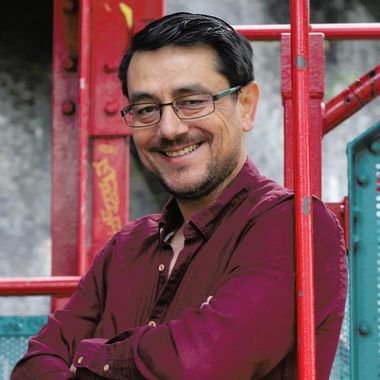
Dr Alberto Urrutia-Moldes
Researcher and Consultant, University of Westminster, United Kingdom
Dr Alberto Urrutia-Moldes is the author of Health and Well-being in Prison Design: A Theory of Prison Systems and Framework for Evolution (Routledge, 2022), a book that offers a bold rethinking of how prisons are conceived, designed, and evaluated. Drawing on international research and interdisciplinary theory, the work proposes a new framework that places human health and well-being at the heart of prison system development.
In this session, Dr Urrutia-Moldes will share how the research behind the book was designed, conducted, and executed, outlining the challenges of studying diverse carceral environments across different national contexts. He will explain how the findings were translated into a comprehensive and practical framework for reimagining prison design—from the institutional level to the architectural scale.
With over 15 years of professional experience in prison architecture, including leadership roles in Chile’s prison service and consultancy work advising prison systems internationally, Dr Urrutia-Moldes bridges theory and practice. Now a Lecturer and Researcher at the University of Westminster, his work speaks to professionals, policymakers, and academics seeking new ways to align justice, architecture, and human dignity.
This session will be of interest to anyone engaged in justice reform, institutional design, and the future of incarceration. It invites critical reflection on how built environments shape the experiences, health, and futures of those who live and work within them.