Parallel Workshops
Partnerships are now central to modern corrections. Governments increasingly rely on private sector organizations, NGOs, academics, and international bodies to support rehabilitation, healthcare delivery, digital transformation, and broader correctional reform. Yet despite the growing emphasis on collaboration, an important question remains insufficiently explored: what distinguishes partnerships that genuinely deliver outcomes from those that remain largely transactional?
This panel will examine how partnership structures—particularly the distribution of roles, risk, accountability, incentives, and decision-making authority—influence whether collaboration enables meaningful system improvement or simply reinforces existing approaches.
Many correctional partnerships continue to operate through procurement, compliance, or stakeholder-engagement models that emphasize activity and delivery rather than measurable correctional outcomes such as rehabilitation, reintegration, institutional safety, continuity of care, staff wellbeing, and long-term societal impact.
Bringing together perspectives from correctional leadership, the private sector, and international stakeholders, the panel will explore:
What differentiates a strategic partnership from a vendor relationship,
How accountability and risk are distributed across sectors,
How trust and credibility are established,
And what conditions are necessary for partnerships to support innovation and measurable improvement.
Proposed participants include representatives connected to the Portugal Prison Service, Kenya’s justice sector, Dave Lageweg, and a prospective NGO or civil society organization involved in correctional reform and health-related outcomes.
The session is intended to provoke candid discussion about how corrections can structure partnerships that move beyond service delivery toward genuine, outcome-driven
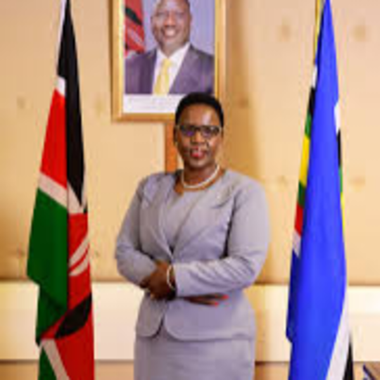
Dr. Salome M. Beacco is the Principal Secretary for Correctional Services in Kenya, providing strategic leadership across the country’s correctional and rehabilitation systems. With extensive experience in justice, governance, and public-sector transformation, she has been a strong advocate for cross-sector collaboration, rehabilitation-focused reform, and modernization initiatives within correctional services. Dr. Beacco brings an important international and public-sector perspective on partnership, accountability, and system-level outcomes in corrections.
She is an Advocate of the High Court of Kenya, she holds a Bachelor’s degree in Law (LLB), a Master’s degree in Leadership and Governance (LLM) both from University of Nairobi Faculty of Law and a Diploma in legal studies from Kenya School of Law. she is also an ACII London Chartered Insurer. She has been a consummate professional in the field in legal practice with over 25 years experience as Founding Partner at Wanyonyi & Muhia Advocates.
During the early stages of her career began as a Legal Assistant at Insurance Company of Africa Ltd, Legal Officer at Phoenix of East Africa Insurance Company, Head of Legal Department at AIG Insurance Co. Ltd. and as Legal Consultant at Bamburi Cement Co. Ltd