When something goes wrong in a correctional agency, the typical response is to blame employees, make new policies, or give more training. But this doesn't make the system safer. Instead, it can make things worse because employees are afraid to speak up about what went wrong and how to prevent it from happening again.
To truly make a correctional agency safer, we need to move away from a culture of blame and use a different approach that involves employees in safety efforts and looks at all the factors that contribute to problems. This approach, based on safety science, has been successful in other industries like aviation and healthcare.
The Montana Department of Corrections has adopted this approach and has seen initial positive results in system improvement, worker satisfaction, and retention. The safety science approach involves redesigning incident reviews to focus less on worker failure and more on systemic issues that contribute to problems. It also involves creating a culture of trust and transparency, where staff can share their concerns and ideas for improvement without fear of retribution.
In addition, the approach involves shifting the organization's response to high-profile events from blaming individuals to highlighting the complexity of correctional work. By using this approach, agencies can create a culture of safety that promotes accountability and continuous improvement, while improving outcomes for employees and the people they serve. This presentation will discuss the safety science approach and share data on the positive outcomes it has had in the Montana Department of Corrections.
×
Cynthia Wolken
Deputy Director, Montana Department of Corrections, United States
Deputy Director Cynthia L. Wolken joined the Montana Department of Corrections as deputy director in 2018. Wolken, an attorney, was instrumental in the passage of justice reform legislation in her role as a Montana senator representing the Missoula area in 2015 and 2017. She graduated from the University of Colorado in Boulder with a Bachelor of Arts in Geography and International Relations. She earned her Juris Doctorate from the Washington University School of Law in St. Louis, Missouri.
×
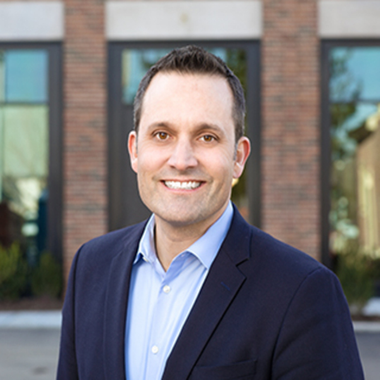
Scott Modell
Founder, Collaborative Safety, United States
Scott J. Modell received his Ph.D. from the College of Education at Florida State University in 1997. Dr. Modell is Co-Founder of Collaborative Safety, LLC. He has served as the Deputy Commissioner of the Tennessee Department of Intellectual and Developmental Disabilities and the Tennessee Department of Children’s Services. Prior to moving to Tennessee, Dr. Modell spent fifteen years as a Professor at California State University, Sacramento. He has authored nine books and has over 300 published articles and abstracts. Dr. Modell has been a leading advocate for applying human factors and system safety principles to human service agencies. Specifically, he has supported the development of a widespread culture of safety that has increased the quality of work for his staff and improved outcomes for those they served. Notably, Dr. Modell supported the development of safety management systems, which are recognized as the first of their kind in the field of human services. Dr. Modell and his colleagues were referred to as pioneers in safety science by the Federal Commission to Eliminate Child Abuse and Neglect Fatalities. Dr. Modell is a nationally recognized speaker in the areas of abuse, crime victims with disabilities and the application of safety science to human services agencies.
×
Noel Hengelbrok
Founder, Collaborative Safety, United States
Noel Hengelbrok is a Co-Founder of Collaborative Safety, LLC and received his Master’s Degree in Human Factors and System Safety from Lund University. He was formerly the Director of Safety Analysis for the Tennessee Department of Children’s Services (DCS) and the Director of Safety Systems for the Department of Intellectual and Developmental Disabilities (DIDD). Noel is dedicated to safety innovation and was a key developer for the Tennessee DCS Child Death Review, which is the first of its kind to use human factors and system safety analysis methods to review critical incidents in child welfare agencies. In addition to his contributions in the field of human services, he is dedicated to improving safety in public safety and human services organizations by establishing new ways to engage employees in safety efforts that allow an organization to learn and improve. This involves researching and developing enhanced accountability systems to foster safety improvement. Mr. Hengelbrok is a published author of research applying safety science to human service agencies and has worked with numerous state agencies to improve their critical incident review processes and advance a culture of safety. Notably, he and his colleagues were referred to as pioneers in safety science in a federal report authored by the Commission to Eliminate Child Abuse and Neglect Fatalities.