Speakers

Pedro Cabrita

Parallel Workshops
How can correctional systems move beyond imprisonment to actively support employment successful reintegration?
This session presents ReIncorpora program, a scalable Iberian model implemented in Spain and Portugal, involving 80 partner organisations, 122 professionals, and 118 correctional facilities and probation teams. The programme integrates vocational education and training (VET), individualised pathways, and employers' engagement to improve employment reintegration after release.
In Spain (2011–2025), ReIncorpora Program has supported 20,139 individuals, achieving 19,256 job placements and a 52% insertion rate. In Portugal, since 2024, it has reached 499 participants, with 129 placements and a 12-month employment retention rate of 70%, demonstrating sustained impact.
Through practical examples, the session will highlight how multi-stakeholder collaboration, linking correctional services, training providers, civil society, and employers, bridges the gap between incarceration and employment. It also presents concrete tools such as skills assessment, tailored training, and coordinated support.
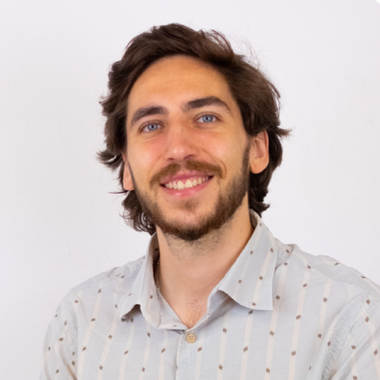
Pedro Cabrita is a member of Aproximar, Cooperativa de Solidariedade Social, where he works in the Technical Office of the ReIncorpora Program at the national level (Portugal), supporting the coordination, monitoring, and implementation of initiatives aimed at the training and socio-professional reintegration of individuals undergoing reintegration. As part of these duties, he collaborates with various institutional entities and local partners, contributing to the creation of opportunities for training, employability, and social inclusion.
ReIncorpora Program is funded by Fundación La Caixa (https://incorpora.fundacionlacaixa.org/es/reincorpora).

Bruno Coutinho is a sociologist, specialized in inequalities and social policies, with a postgraduate degree in public policy evaluation.
He was a lecturer at the Polytechnic Institute of Porto and a researcher in the Social Economy research line at the Centre for Organisational and Social Studies (CEOS.PP). Over the past 20 years, he has worked in the design and management of social projects and programmes in Portugal and in the Portuguese-speaking African countries (PALOP).
He has delivered more than 50 training courses on social impact measurement and evaluation for several international organizations.
With over 10 years of experience as an evaluator of programmes and public policies for the European Development Fund, he has also contributed to the evaluation of United Nations strategic cooperation frameworks with third countries.
He is currently part of the staff at the “la Caixa” Foundation, where he works within the Deputy Directorate-General for Culture and Territory and is responsible for the Incorpora and ReIncorpora Programme in Portugal.