The MicroResearch (MR) vision is to train, mentor, and support multidisciplinary community health and safety focused research teams to improve health and safety outcomes in low- and middle-income countries (LMICs) and in communities in Canada. In Uganda, with the Uganda Prisons Service, we accomplish our vision by conducting MR workshops to train and coach community members in research skills. Given the changing world, laced with uncertainties, the new way forward embodied by MR rests on how the communities and frontlines affected know what questions to ask because they feel the impacts. Our presentation has three objectives: 1. To understand how community-centred (i.e., the correctional service being the community) research can be done by the community members (i.e., prison staff and prisoners); 2. To explain how research can be democratized, decolonialized, and made more equitable; 3. To show how empowering people with science can be life changing.
We first explain MR and how teams conduct the research and implement solutions in response to local challenges (i.e., they come up with the question) to make change. After which, because what teams learn in less than two weeks is largely unbelievable, we show clips from the presentations of four UPS MR teams outlining their research questions, literature, methods, knowledge mobilization plan, and budget. The research questions of the four teams i) tied to prisoner mental heath and barriers to accessing care; ii) how substandard and limited housing affect domestic violence among junior ranking officer; iii) why healthcare staff are reluctant to treat prisoner-patients presenting with tuberculosis; and iv) how staff at the Kampala Extra Region Prison Campus experience occupational stress.
After hearing from the teams, we draw on the UPS MR experiences to reveal how research can be democratized and decolonialized, how research transforms people, interpretations, and practices among participants but also their leaders. The power to enable research practices in public safety and health and to listen to the front link to learn what to ask is an essential way forward in a changing world where, quite simply, impacts are unknown and under researched because the changes are unpredictable, inconsistent, and unknown.
×
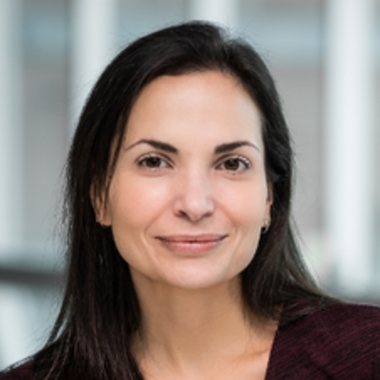
Rosemary Ricciardelli
Professor and Research Chair, Memorial University of Newfoundland, Canada
Dr. Rosemary Ricciardelli is Professor (PhD) and Research Chair in Safety, Security, and Wellness, at Memorial University’s Fisheries and Marine Institute. The winner of the 2023 International Corrections and Prison Association’s Research Excellence Award, the Canadian Sociological Association’s Angus Reid Applied Researcher Award, and the President’s Award for the International Community Justice Association in 2024. Ricciardelli was also elected to the Royal Society of Canada and is a fellow of the Canadian Academy of Health Sciences. Her research centers on evolving understandings of the needs of public safety personnel, their leaders, and those who experience systems of justice with a focus on occupational and posttraumatic stress injuries, vulnerabilities, and risk. She has published 18 books, 335+ journal articles, and 75+ chapters and given over 600 presentations in the areas of police, firefighting, correctional workers, communicators, security intelligence officers, and people who are criminalized. As a sex and gender researcher, her interests lay in the supporting societies through empowerment of the frontlines for positive community impacts always informed by evidence. She leads a longitudinal study on the mental health and well-being experiences of correctional officers employed by Correctional Services Canada and has participated in correctional officer training with the Service and all Correctional Services in Canada. She also works in partnership with the Uganda Prison Service, Michigan Department of Corrections, and the Texas Juvenile Justice Department, etc., and contributes to MicroResearch International. ScholarGPS ranks her as the 3rd most influential social scientist in Canada, and the 10th internationally in her discipline.