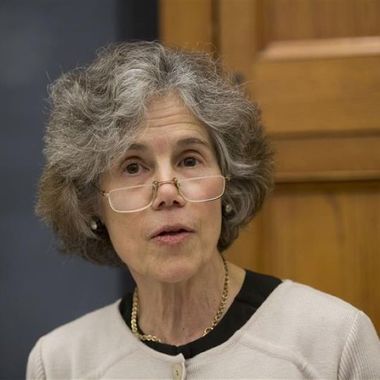
Professor Judith Resnik
Arthur Liman Professor of Law, Yale Law School, United States
Professor Judith Resnik is the Arthur Liman Professor of Law at Yale Law School, where she teaches courses on federalism, procedure, courts, prisons, equality, and citizenship. Her scholarship focuses on the relationship between democratic values of egalitarianism and the functions of government including its provision of services; the role of collective redress and class actions; contemporary conflicts over privatization; the relationships of states to citizens and noncitizens; the interaction among federal, state, and tribal courts; practices of punishment and the history of incarceration; and equality and gender. Resnik is the founding director of Yale’s Arthur Liman Center for Public Interest Law which, since 1997, has awarded year-long fellowships to more than 200 Yale Law School graduates and sponsors undergraduate programs at several universities and colleges. The Liman Center research projects include monographs on solitary confinement, a website, Seeing Solitary, and more. Resnik received a two-year Andrew Carnegie Fellowship for research on her book, Impermissible Punishments: How Prison Became a Problem for Democracy, available in the summer of 2025 from the University of Chicago Press. The book explores the trans-Atlantic development and infrastructure of a profession of “corrections;” the shaping of standards for the “treatment of prisoners;” the impact of World War II, the Holocaust, and the U.S. the civil rights revolution in enabling prisoners some success in gaining recognition of limits on the kinds of punishments government can, in a polity claiming to be committed to the equal status of its members, impose on individuals convicted of crimes; and the challenges of materializing that status in the face of security and community needs. Other books and articles include Representing Justice: Invention, Controversy and Rights in City-States and Democratic Courtrooms (Yale Press, 2011, reissued as an e-book 2022); the co-edited Federal Courts Stories (2009), and The Capital of and the Investments in Courts, State and Federal (NYU L. Rev, 2024). Resnik is also an occasional litigator, including in the U.S. Supreme Court. In 2018, she was awarded an honorary doctorate from University College of London; she has recently been reappointed as an honorary visiting professor there. Resnik has chaired the Association of American Law Schools’ Sections on Federal Courts, Procedure, and Women in Legal Education. She is a member of the American Philosophical Society, a fellow of the American Academy of Arts and Sciences, and a Managerial Trustee of the International Association of Women Judges.