The success of penal systems requires not only the implementation of existing rules but also the continuous support of the personnel in terms of knowledge, skills and psychosocial aspects. The contemporary understanding of execution, which is based on human dignity, is based on the continuous development of the professional competence of the personnel, their acting with a sense of belonging and their psychosocial support.
In Türkiye, the training of the personnel of the penal system is carried out within a planned and continuous institutionalized structure. These trainings, which are shaped according to the needs in the field and strengthened with content that prioritizes individual development, do not only provide legal knowledge; they also undertake critical functions such as preventing professional burnout, reinforcing the sense of belonging and keeping motivation alive. Every element, from sociocultural activities to technological infrastructure, is an integral part of this process. While the trainings, which are shaped in line with the demands from the field, are developed and updated with feedback; the technological equipment and social activities of the training centres make the learning process more effective and efficient.
As a result; highly motivated personnel who are strengthened by education are not only the implementers of the penal system, but also the guarantors of justice, human rights and social security. This motivation supported by education is the most powerful dynamic that carries the penal system forward.
Moderated by Brendan Griffen, Strategy & Governance, Northern Ireland Prison Service
×
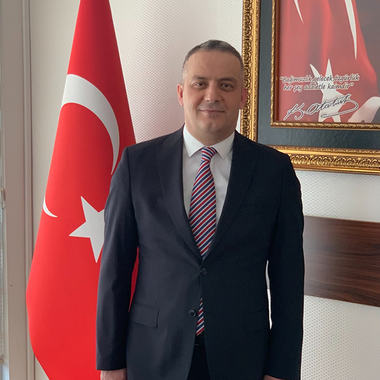
Gökhan Köseoğlu
Judge, Head of Personnel Training Department, General Directorate of Prison and Detention Houses Türkiye, Türkiye
Gökhan KÖSEOĞLU, currently serving as the Head of Personnel Training Department of the General Directorate of Prison and Detention Houses Türkiye, has built an extensive career within the Turkish legal and penal system since graduating from Ankara University Faculty of Law in 2002. After completing his law internship at the Ankara Bar Association, the same year, he worked as a freelance lawyer, registered with the Hatay Bar Association in 2003.
His prosecutorial roles include positions as the Amasya/Suluova Public Prosecutor from 2006 to 2008, the Hatay/Altınözü Public Prosecutor from 2008 to 2011, and later, the Ankara Public Prosecutor from 2016 to 2019. Köseoğlu also served as an investigating judge of the Supreme Court of Appeals between 2011 and 2013, as well as at the Ministry of Justice, General Directorate of Prisons and Detention Houses from 2013 to 2016, and was the Supreme Court of Appeals Public Prosecutor from 2019 to 2022.
His contributions to the Turkish Penal Execution System are significant, including the preparation of the "Penal Execution Institutions and Detention Houses Monitoring Boards Training Textbook" for the Ministry of Justice. Köseoğlu has also represented Turkey in international forums, such as a study visit to Sweden in 2014 for the "Technical Assistance Project for the Improvement of Mental Health and Addiction Treatment Services in Penal Institutions", the European Organization of Prisons and Correctional Services meeting in Portugal/Lisbon in 2015, and the European Prison Training Academies (EPTA) Network meeting in Tallinn/Estonia in 2023.