This presentation addresses the growing use of artificial intelligence in evaluating the risk of recidivism among juvenile offenders, focusing on legal and ethical implications within the framework of criminal procedure law and the principle of the best interests of the child. AI-supported risk assessment tools are increasingly being used to predict future offenses, aiming to assist judicial decision-making processes. However, when applied to children, these tools must be carefully scrutinized due to the unique developmental, legal, and psychological characteristics of minors. The study highlights key concerns, such as algorithmic bias, lack of transparency, and the limited ability of current systems to consider the social context and rehabilitation potential of children. These concerns raise questions about the fairness, accuracy, and proportionality of decisions influenced by AI in juvenile justice procedures.
Furthermore, the session emphasizes that the best interests of the child must be the central guiding principle in all phases of AI system development and implementation. The principle not only requires that the child's rights be respected, but also that decisions be made with a focus on reintegration and individualized treatment, rather than punitive approaches. In conclusion, while AI can provide valuable insights and efficiency to justice systems, its use in cases involving children must be strictly regulated. Transparent and accountable practices, along with child-centered safeguards, are essential to ensure that AI supports - not undermines - justice and protection for young offenders.
Moderated by Simon Bonk, Chair, Technology Solutions Network, ICPA, Canada
×
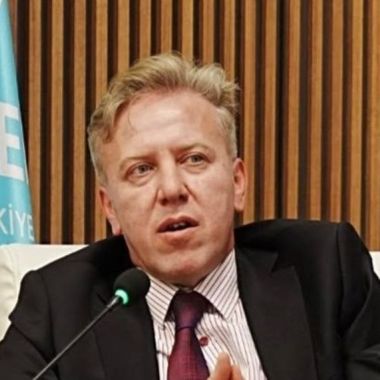
Dr. Süleyman ÖZAR
Deputy Chief Public Prosecutor, Ministry of Justice, Türkiye
Süleyman Özar was born in Uşak in 1979. He graduated from Ankara University Faculty of Law in 2001. He completed his Master's and PhD studies in the Department of Public Law at the same university. His doctoral dissertation focused on "Statute of Limitations in Turkish Criminal Law." Özar began his career as a public prosecutor in 2006. In 2011, he was appointed as a rapporteur judge at the Ministry of Justice, where he served as Head of the Legislation Department and Deputy Director General. He also held the position of judicial counselor in the Ministry’s foreign missions in Malta, Vienna, and London. Between 2018 and 2020, he worked at the OSCE Permanent Mission on issues such as hate crimes, media freedom, and the international dimensions of counter-terrorism. He is currently serving as Deputy Chief Public Prosecutor of Ankara West Courthouse, a position he was appointed to by the summer decree of 2022.