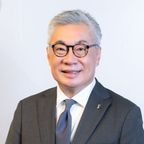
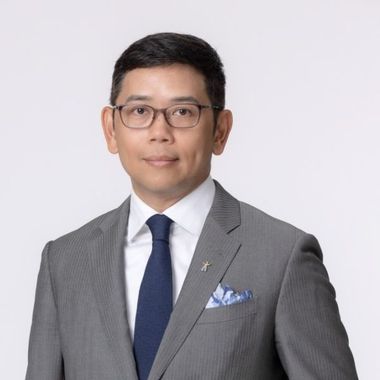
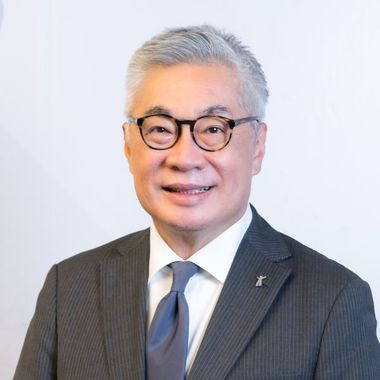
Kittipong Kittayarak
Chairperson of the Board of Directors, Thailand Institute of Justice, Thailand
1. Kittipong Kittayarak has long been involved in judicial and criminal justice reform in Thailand. He has made substantial contributions to the improvement of the Thai judicial system through his roles in a number of national bodies. He has been known as one of the champions for the reform of the Thai criminal justice system towards due process and the rule of law, and for pioneering the implementation of the restorative justice and community justice programs in Thailand, basing on the international practices.
2. He also played a significant role in restructuring Thai Ministry of Justice to be more cohesive and in line with the international practices. Under his leadership at the Ministry of Justice, multi-disciplinary policies to tackle various criminal justice issues were introduced and implemented for the first time in Thailand.
For example:
a. Treating drugs abuse with medical care and rehabilitation, instead of criminal offenses.
b. Introducing the concept of restorative justice into Thai criminal justice procedure
3. Moreover, Kittipong has contributed to the reform of the Thai police system through his role as a member and secretary of the Thai Police Development Committee in the year 2006 – 2008.
For the National Agenda --
1. Kittipong took part in the drafting process of the Thai Constitution 1997 which is claimed to be the ‘people constitution of Thailand’
2. In addition, Kittipong actively engaged in the area of peace and reconciliation in Thailand. Through his role in the National Reconciliation Committee and the
Independent Commission on Justice and Civil Liberty of the Southern Border Provinces, he involved in the national mission to resolve the conflicts in the deep
south of Thailand. During the politically polarized climate of Thailand in 2010 – 2012, Kittipong, as a member of the Truth for Reconciliation Commission of
Thailand (TRCT), designed and navigated the reconciliation process, balancing between finding facts to restore trust among stakeholders and highlighting
indisputable truth that encourage all the parties to move forward together.
For the International Platform of UN and ASEAN –
3. After completing his six-year term as the Permanent Secretary of the Ministry of Justice, in February 2015, he assumed a new role as the Executive Director of the Thailand Institute of Justice (TIJ), a public organization working in the promotion, research and capacity-building activities in accordance with the justice-relates UN standards and norms.
4. Under his leadership, the TIJ has been recognized by the UNODC as the latest member of program network institutes of the United Nations -- the only organization in the South East Asia.
5. TIJ actively and successfully bring the UN Standard and Norms to implementation into local practices in Thailand and other ASEAN countries. One strong success is the Model Prison Project - TIJ’s pioneering work in the implementation of the United Nations Rules for the Treatment of Women Prisoners and Non-custodial Measures for Women Offenders or the “Bangkok Rules.” The organization is now serving as a global training hub for good practice on the implementation of the Bangkok Rules.
6. He is also supporting the organization to take an active role in bringing the UN standards and norms into local practices in other area such as violence against women and children.