Speakers

Gethin Jones

Tosha Big Eagle

Dwayne Antojado

Plenary Session
This panel discussion brings together four lived experience experts from the UK, North America, and Australia for a frank conversation about the opportunities and challenges of partnering with people with lived experience across the corrections continuum.
Led by keynote speaker Gethin Jones, the panel features Tosha Big Eagle, Dwayne Antojado, and Tassie Ghilani, bringing together decades of collective experience across justice systems, advocacy, and lived experience leadership. Together, they will explore what meaningful and respectful engagement looks like in practice, examining the benefits of genuine partnership, the risks of tokenistic or unplanned engagement, and the practical steps organisations can take to embed lived experience in ways that create lasting impact.
As corrections systems continue to evolve in response to increasingly complex community and custodial environments, partnering with people who have direct lived experience is critical for all jurisdictions. This session will challenge participants to consider how authentic collaboration can inform policy, improve practice, and contribute to more effective, humane, and responsive correctional systems.
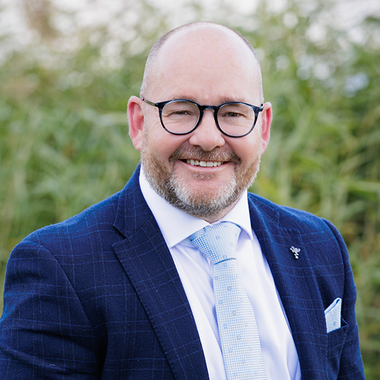
Gethin Jones is the Founder and CEO of Unlocking Potential, an international consultancy working across the UK, Australia and the United States to help create justice systems that are fit for purpose and fairest for all; this includes those who work within it, live within it and the communities it serves. Through consultancy, leadership development, keynote speaking and programme design, Gethin works with prisons, probation services, governments, charities and private sector partners to strengthen collaboration and improve outcomes across the justice system.
What makes Gethin’s perspective unique is that he has experienced the justice system from both sides of the same door. After spending much of his early life in care, followed by eight years in prison and addiction, he rebuilt his life before going on to spend more than a decade working in public services, progressing from volunteer to senior manager responsible for a £1.5 million programme tackling health inequalities. Today, he combines lived and professional experience to challenge assumptions, bridge divides and bring together the voices of those who work within the system, those who have lived through it, and the communities it serves. His plenary session, Two Sides of the Same Door, explores why lasting reform depends on moving beyond single perspectives towards genuine collaboration and a 360-degree understanding of justice.


Dwayne Antojado is a Lecturer in the European Studies Department within the School of Social Sciences at Ateneo de Manila University in the Philippines, and at Adelaide University in Australia. His work explores how knowledge produced through experiences of criminalisation, imprisonment, punishment, and social exclusion can reshape the ways institutions understand and respond to harm. Across his academic and professional work, Dwayne has become closely associated with the developing field of lived experience criminology. His scholarship examines how people who have directly encountered the criminal legal system, particularly imprisonment, come to hold forms of knowledge that are often overlooked, marginalised, or reduced to personal testimony within research, policy, and practice. Rather than treating people with lived experience simply as the objects of criminological enquiry, Dwayne’s work argues that they should be recognised as theorists, educators, researchers, advisers, and leaders whose perspectives can fundamentally alter how criminal justice problems are understood and addressed. This intellectual commitment is reflected in his work as co-author of Lived Experience in Criminal Justice: Research, Education, Practice and Activism, (with Gillian Buck, Lucy Campbell, Kemi, Natasha Ryan, and James Windle), and as co-editor of Beyond Autoethnography: Lived Experience Criminology (with Danica Darley and Matthew Maycock). Together, these books advance a broad argument that lived experience must be understood not as an optional addition to criminal justice work, but as a vital form of expertise that should shape research, advocacy, professional practice, teaching, organisational governance, and public debate.
Dwayne’s research is particularly concerned with the politics of representation and participation. He examines the conditions under which people with lived experience are invited into academic, institutional, and policy spaces, asking whether they are genuinely supported, fairly remunerated, and able to influence decisions, or whether their involvement remains symbolic and extractive. His work therefore engages questions of epistemic justice, co-optation, credibility, voice, and power, while also insisting that lived experience participation must be accompanied by concrete organisational structures: fair payment, accessible pathways into employment and leadership, appropriate training and mentoring, institutional support, meaningful governance roles, and accountability for how lived experience knowledge is used. Grounded in autoethnographic and ethnographic approaches, and informed by his own experience of incarceration in Australia, Dwayne’s scholarship also attends to the affective, atmospheric, relational, and sensorial dimensions of carceral and post-carceral life. He is interested in how punishment is felt through the body and encountered through everyday institutional rhythms, relationships, spaces, silences, memories, and forms of exclusion. This work challenges abstract or purely administrative accounts of imprisonment by drawing attention to the lived texture of confinement, stigma, surveillance, release, and reintegration. In doing so, it contributes to wider debates about the limits of formal legal and policy responses, and the need for criminology to take seriously the embodied and emotional consequences of punishment.
Alongside his academic work, Dwayne is a member of Penal Reform International’s Global Group of Experts by Experience. He has worked with a range of international, governmental, academic, and civil society organisations to embed lived experience knowledge within organisational decision-making, policy development, research, education, and justice reform. His collaborators have included the United Nations Office on Drugs and Crime, Penal Reform International, governmental organisations in the Philippines, Australia, and New Zealand, as well as universities, community organisations, and international justice partners. A key part of this applied work involves supporting organisations to move beyond broad commitments to inclusion towards practical and durable forms of lived experience leadership. Dwayne has contributed to the development of lived experience policies, engagement frameworks, advisory structures, workforce pathways, training programmes, and organisational tools that help institutions assess their readiness to work ethically and meaningfully with people who bring direct experience of the criminal legal system.
Beyond these institutional and organisational engagements, Dwayne’s work also turns to the broader justice landscapes shaped by state violence, exclusion, and institutional neglect. He is interested in forms of repair that extend beyond formal legal remedies or procedural reform, asking how justice might also be cultivated through recognition, dignity, care, memory, relationships, and the affective and sensory organisation of time and space. Across his scholarship, teaching, and advocacy, he advances work that is politically engaged and grounded in the everyday realities of those whose lives have been shaped by criminal justice institutions. Ultimately, his work seeks to broaden who is recognised as capable of producing knowledge about justice, and to ensure that those most affected by punishment are not merely spoken about, but are able to participate meaningfully in imagining and shaping more just futures.