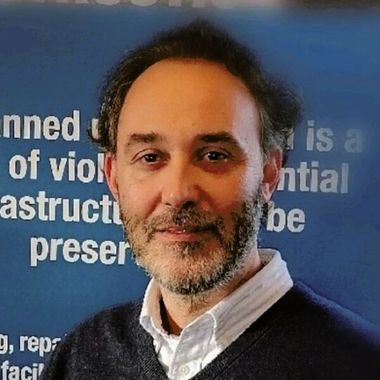
Jean-Marc Zbinden
Architect - Water and Habitat in Detention Advisor, International Committee of the Red Cross (ICRC), Switzerland
Jean-Marc Zbinden is an architect and senior Water and Habitat (Wathab) Advisor with the International Committee of the Red Cross (ICRC), serving within the Persons Deprived of Liberty Unit at the ICRC’s headquarter. In this role, he develops global technical guidance and policy on public health engineering in detention settings.
Since joining the ICRC in 2001, Mr. Zbinden has held numerous field and coordination roles across Africa and Asia. He began as a Wathab Engineer in Ethiopia, South Sudan and Afghanistan, contributing to wells and water-system rehabilitation, support to displaced persons’ camps, and the construction or rehabilitation of clinics, hospitals, and urban water treatment facilities. He later served as Wathab Coordinator in Liberia, the Republic of Congo, Côte d’Ivoire, and Zimbabwe.
From 2008 to 2014, he worked at ICRC Headquarters as Head of Sector, overseeing Wathab activities in West Africa and Asia-Pacific, with responsibilities spanning policy, human resources, and guidelines. He also led the civil engineering and architecture thematic portfolio for major construction projects worldwide.
He then resumed field leadership roles as coordinator and regional coordinator based in Bangkok and Manila until 2023, focusing primarily on detention, including representing the ICRC on the board of the Asian Conference for Correctional Facilities Architects and Planners (ACCFA).