Speakers

Parallel Workshops
The Singapore Prison Service (SPS) adopts a comprehensive approach to community mobilisation by collaborating with government agencies, social service organisations, grassroots, religious groups, and individual volunteers. Through these partnerships, SPS strengthens the economic, social, and community capital of inmates and ex-offenders, and build a safer throughcare ecosystem that supports successful reintegration, long term desistance, and reduced recidivism.
SPS works with the Yellow Ribbon ecosystem, which includes (i) Yellow Ribbon Singapore, the lead agency for championing hope, acceptance, and second chances for ex-offenders, (ii) Yellow Ribbon Cares, a charity formed through the unification of three aftercare organisations, and (iii) Yellow Ribbon Industries Pte Ltd, a social enterprise.
On the community and volunteer front, to ensure meaningful and sustained individual volunteer contributions, the IMPACT training framework equips volunteers with evidence-informed rehabilitation competencies. Culturally nuanced approaches further ensure inclusivity across minority communities affected by incarceration.
SPS also implemented a Peer Engagement and Empowered Rehabilitation Support (PEERS) Framework to leverage the lived experience of offenders during incarceration to facilitate relationship-building circles and motivational programmes. This peer work extends into aftercare, where successfully reintegrated individuals may be recruited as Peer Mentors, who co-facilitate psychology-based correctional programmes, serve as volunteer case officers, and support community groups.
SPS leverages institutionalised support from Yellow Ribbon and its subsidiaries, community networks, and peer supporters to drive rehabilitation efforts. These systems help to strengthen support for inmates and ex-offenders, reinforce positive rehabilitation outcomes, and contribute to a more resilient and inclusive throughcare ecosystem.
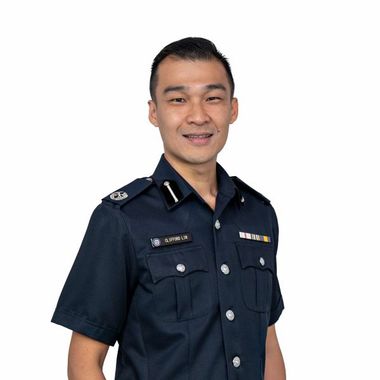
Clifford has been serving with the Singapore Prison Service (SPS) since 2011, holding a range of operational and policy-making leadership appointments throughout his career.
He previously served at the Ministry of Home Affairs (MHA) as Deputy Director (Rehabilitation), where he oversaw legislative amendments and rehabilitation policy development. Within SPS, Clifford has also led two institutions as Superintendent, ensuring the smooth running of daily institutional operations and spearheading offender rehabilitation efforts.
He currently serves as Director of the Community Corrections Command, overseeing SPS’s initiatives to support supervisees in the community and strengthen their reintegration and long-term desistance from offending.