This panel explores innovative approaches to supporting formerly incarcerated women as they navigate the challenges of reintegration. The four panelists will share insights into programs and research aimed at fostering successful re-entry, addressing the unique needs of women, and supporting change across different cultural and systemic contexts.
Decolonizing Reintegration: The Story of a Women's Rehabilitation Center in South Africa
This panelist examines the Beyond Bars Akademia (BBA), an initiative designed to empower formerly incarcerated women in South Africa. Rooted in Indigenous cultural principles, the program highlights the value of community connection, vocational training, and mental health prioritization.
Challenges and Opportunities for Women's Post-Prison Reintegration in Bangladesh
Using qualitative interviews with 50 participants, this study identifies critical barriers to successful re-entry for women in Bangladesh, including unemployment, stigma, and a lack of institutional resources. The findings highlight the role of NGOs in bridging gaps in support and emphasize the need for targeted programs that address social exclusion and skill development to enable long-term reintegration.
Women in Recovery: A Ground-Up Approach in Singapore
This panelist shares findings from a two-stage qualitative study by the Women in Recovery Association (WIRA) in Singapore. By engaging women in recovery, the research uncovered specific needs such as career skills, family relationship support, and recreational opportunities. These insights have informed the development of tailored services, demonstrating the power of community-driven solutions for addressing the multifaceted challenges women face during re-entry.
Pathways to Employment: Overcoming Barriers to Employment for Formerly Incarcerated Women in New South Wales (Panel Moderator)
The Pathways to Employment (P2E) program reduces stigma and builds bridges between women exiting custody and potential employers. Through pre- and post-release engagement and formalized agreements with employers, P2E has facilitated smoother transitions into the workforce.
×
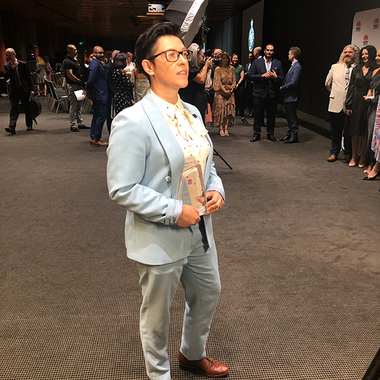
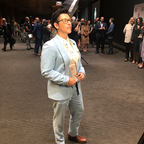
Krista Konemann
Governor, Corrective Services New South Wales, Australia
Krista Konemann commenced her working life as a therapist for children, following completion of a Bachelor of Psychology (Forensic) and Criminology qualification in 2004. Krista moved quickly onto her passion area, Corrections, taking up a role as a Parole Officer with Corrective Services New South Wales, then as the Sex Offender Research Officer.
Krista moved to Tasmania in 2007 and into the disability sector, subsequently completing a Master of Business and tertiary qualifications in Disability & Community Services. Krista then delivered large scales Parole reforms for the South Australian Department for Correctional Services from 2009, culminating in receiving a Ministers Award.
Krista returned to the non-Government sector in Queensland, managing Aboriginal & Torres Strait youth in out-of-home-care, in addition to managing state and federally funded ‘Closing the Gap’ contracts. It was during this time that Krista has the pleasure of living in an Aboriginal community off the Cape York Peninsula.
Krista returned to Sydney in 2014, as Senior Operations Manager for St Vincent de Paul Society, managing the organisations accommodation and catering services statewide, then moved back to Corrective Services New South Wales in 2016, taking up reform and project management roles. In 2020, Krista achieved the role of General Manager, first oversighting Inmate Education & Training, and then Reintegration. Krista completed her Certificate III in Correctional Practice, followed by an Advanced Diploma of Leadership & Management in 2023, winning the 2022 Premiers Award for the ‘Pathways to Employment’ program. In 2024, Krista became the Governor of Silverwater Women's Correctional Centre.
×
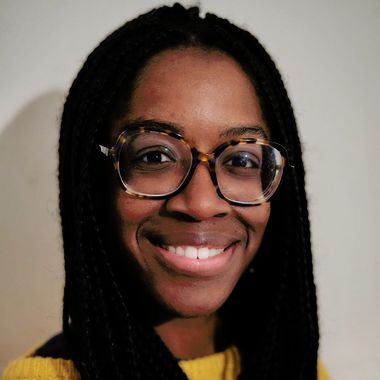
Stephanie Fanfan
PhD Candidate, Université Paris Cité, France
Stephanie is an Educational Consultant and PhD student in Criminology, specializing in reintegrating formerly incarcerated women professionally. Under the supervision of Dr. Corinne Rostaing (Université Lyon 2) and Dr. Sergio Grossi (John Jay College of Criminal Justice), her research focuses on how intersecting factors like gender, ethnicity, and social class shape the post-incarceration trajectories of women. Drawing on her five years of professional experience at Pollsmoor Prison in South Africa, where she founded a rehabilitation institute for women, Stephanie’s work examines the role of education and vocational training in supporting reintegration and reducing recidivism.
Her criminological research is driven by a commitment to social justice, particularly in addressing the challenges faced by marginalized communities. By analyzing how systemic inequalities affect reintegration, Stephanie aims to identify programs that can break cycles of recidivism and promote long-term success. She is particularly interested in exploring how education can be used as a tool for empowerment, helping formerly incarcerated women overcome the barriers posed by their social and economic circumstances.
×
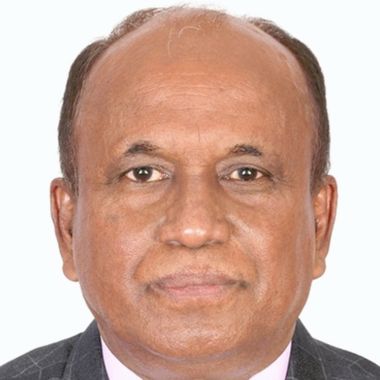
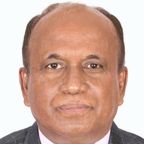
Prof. Mohammed Bin Kashem PhD
Professor of Sociology, National University, Bangladesh
Mohammad Bin Kashem is currently a Professor of Sociology at the National University. He received his B. A (Hon’s) and M.A. in Sociology from the University of Chittagong, Bangladesh, an M.S. in Criminal Justice from the University of Baltimore, Maryland, USA, and PhD in Criminology from the University of Queensland, Australia. At the National University, he served as Dean of the Centre for Post-Graduate Studies, Training and Research, Dean, Curriculum Development and Evaluation Centre, and Acting Registrar.
Kashem was a Fulbright Scholar-in-Residence in the Henry Lee College of Criminal Justice and Forensic Sciences at the University of New Haven, Connecticut, USA in the year 2011-2012. As part of professional development, he also completed a four-month Australian Government’s Endeavour Executive Fellowship -2016 in the Policing and Security Cluster, School of Social Science at the University of Queensland. His research interests include homicide clearance, comparative policing, police reform, and prisoner reintegration. He has published in such journals as the Police Practice and Research, International Journal of Comparative and Applied Criminal Justice, and the Journal of Asian Association of Police Studies. Kashem has contributed several book chapters to: Delbert, Rounds (Ed). International Criminal Justice: Issues in Global Perspectives. Graeme Newman (Ed.) Crime and Punishment Around the World. Asia/Pacific Volume. Shahid M. Shahidullah (Ed.) Crime, Criminal Justice, the Evolving Science of Criminology in South Asia, David Walsh (Ed.) The International Handbook of Investigative Interviewing and Interrogation..Kashem presented numerous papers at professional meetings such as the American Society of Criminology, Academy of Criminal Justice Sciences.
×
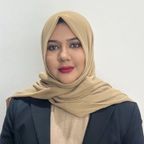
Afia Khanom
Lecturer of Sociology, Mockbul Hossain College, Bangladesh
Afia Khanom is a Lecturer of Sociology at Mockbul Hossain College an affiliate of the National University, Bangladesh. She received her Bachelor of Social Science (BSS) in Sociology from National University, and Master of Social Science (MSS) in Sociology and Master in Population Sciences (MPS) from the University of Dhaka, Bangladesh. She is currently a MPhil Fellow at the National University. Afia also presented papers at various protessional meetings held in Bangladesh. Her research interests include women in corrections, prisoner reintegration, and women entrepreneurship.
×
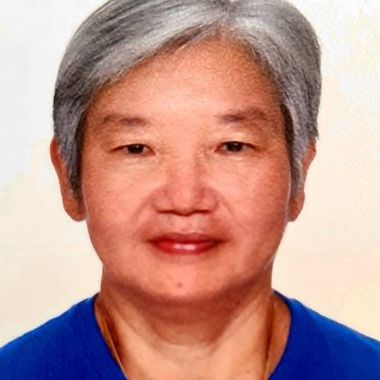
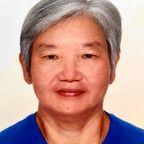
Poh Wah Ang
President, Women in Recovery Association, Singapore
Poh Wah graduated from the University of Auckland, New Zealand with a Bachelor of Arts in Psychology in 1985. She served a 5-month internship with Daytop Village Therapeutic Community, at Swanlake, a drug rehabilitation facility in New York, US in 2001. She was awarded the National Council against Drug Abuse (NCADA) Merit Award (2001) for her 3-year stint in The Turning Point and the Singapore International Foundation (SIF) Special Commendation Award (2012) as project leader, overseeing training for Laotians in drug rehabilitation from 2006 to 2012. She has served on the Board of Women in Recovery as President for many years.
She has been a counsellor since 1991 and has helped more than 1000 drug addicts for the past 30 years. She specialises in individual and group drug counselling. She helped develop the Family Engagement protocol for PFS Family Care when it was established in 2009 and trained their volunteers involved in the family visitation of inmates related to the Angel Tree project.
She formulated a theoretical framework addressing the recovery needs of drug addicts and implemented a 1-year rehabilitative treatment programme for drug addicts in a residential setting. She held a supervisory role in helping recovering drug addicts to become operational staff in a residential setting. She has been involved in consultative training on a freelance basis with Social Service Institute, Prison Fellowship, Christian Counselling Services, Halfway Houses and Singapore Prison Service and other social service agencies (SSAs) on drug rehabilitation and re-integration matters since the 1990s.
×
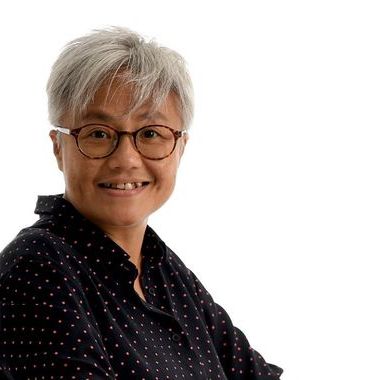
Dr Ee Lyn Tan PhD, MPH
Lead Researcher, Women in Recovery Association, Singapore
Ee Lyn was a career journalist for 25 years. She spent most of that period in Hong Kong as a foreign correspondent for Reuters where she covered a wide spectrum of news beats. In 2009, she received an Asia Human Rights Press Award for an article on maternal mortality in Afghanistan, one in a series of articles she wrote in the war-torn country. In 2019, she wrote for The Straits Times in Singapore, where she delivered in-depth news pieces and commentaries.
Ee Lyn's research interests are in drug use and labour rights. For her master thesis (2009-2010), she researched on the use of psychotropic drugs in Hong Kong. Her PhD thesis (2014-2018) centred on the use of benzene in Chinese factories and its debilitating impact on migrant Chinese workers. In this qualitative study, she used interviews, focus groups and ethnography with victims of benzene poisoning and their family members. Between 2013 and 2018, she taught journalism and qualitative research at the National University of Singapore. She now teaches media and research courses at the Singapore University of Social Sciences.
In 2019, she began volunteering for Women In Recovery Association, a charity in Singapore for women who are former drug users. Ee Lyn heads WIRA's research efforts. She conducted a focus group discussion in 2019 with WIRA members to find out the challenges they faced and what services they needed. The project was aimed at helping WIRA enhance its services to women in recovery.