Parallel Workshops
Children: The Less Visible Stakeholders of Corrections
What if one of the most influential drivers of institutional stability and long-term outcomes remains largely overlooked? Each year, millions of children are affected by parental imprisonment, yet their needs are rarely integrated into correctional policy or practice. This gap undermines child wellbeing and contributes to long-term demand across social and justice systems.
Research consistently shows that maintaining child-parent relationships during incarceration is associated with improved outcomes for children and incarcerated parents, including better reintegration outcomes and, in some contexts, improved institutional behavior. Yet implementation remains uneven, constrained by security requirements, limited resources, and fragmented service provision. A child-centered approach strengthens—not weakens—accountability by recognizing family stability as integral to safer institutions and effective reintegration. Strengthening family relationships can also enhance relational security, supporting more constructive staff–resident interactions and contributing to more stable institutional environments.
This session introduces a practical “multi-tenant” model that positions child-parent connection initiatives as a core operational mechanism, aligning outcomes across children, incarcerated parents, institutions, and communities. Rather than adding new demands, the model integrates existing practices to deliver shared value. Drawing on practice from Children of Prisoners Europe and Connecting Hearts, it presents scalable approaches adaptable across jurisdictions. Participants will leave with practical strategies and an adaptable framework to translate these approaches into their own correctional contexts.
What correctional systems overlook in children, they will confront in future system demand.


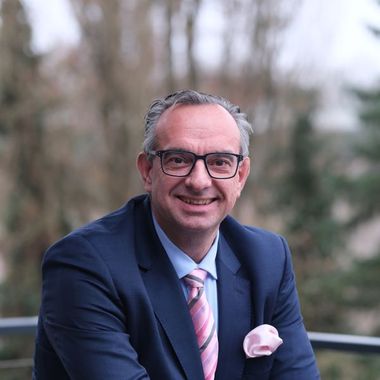
Oliver holds a diploma in Economics from the University of Hamburg and is a former banker. As CEO of Telio Group, he has led the company’s international growth over the past two decades, expanding it from a small team into an organization serving correctional facilities in 23 countries worldwide.
Alongside his professional work, Oliver has been actively involved in entrepreneurial and industry associations, including leadership roles at the Hamburg Chamber of Commerce, Die Familienunternehmer, and the ICPA European Chapter, where he has served as a board member since 2024.
Oliver is committed to supporting rehabilitation and strengthening communication within correctional systems through practical and technology-driven solutions. He also actively promotes collaboration between public and private stakeholders in the corrections sector.
In 2022, Oliver founded Connecting Hearts Foundation to support children and families affected by incarceration, reflecting his long-standing commitment to social responsibility and meaningful connection.