This panel examines a collaborative partnership in Colombia between the national correctional authority (INPEC), Prison Fellowship Colombia, and Prison Fellowship International’s Centre of Excellence (COE). It explores how cross sector collaboration can align intervention delivery, staff training, and applied research within routine correctional operations.
Grounded in restorative justice, the partnership focuses on processes of transformation such as accountability, relational repair, and non repetition of harm across custodial, family, and community contexts. The Colombian setting, shaped by the 2016 Peace Accord and ongoing peacebuilding efforts, offers a relevant context for examining how correctional systems engage with broader transitional justice objectives.
Bringing together perspectives from government, NGO practice, and research, the panel will reflect on governance, data sharing, and joint learning. Participants will gain practical insights into structuring partnerships that link research and practice while strengthening system capacity in complex correctional environments.
×
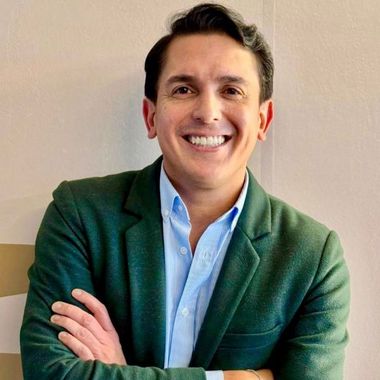
Gabriel Rojas PhD
Director, Centre of Excellence, Prison Fellowship International, Colombia
Gabriel Rojas is Director of the Center of Excellence at Prison Fellowship International. Over the past fifteen years, he has worked with victims, former combatants, and conflict-affected communities in Colombia across legal, institutional, and community settings connected to transitional and restorative justice, holding roles at the United States Institute of Peace, the Embassy of the United States in Bogotá, the International Center for Transitional Justice, the Office of the United Nations High Commissioner for Refugees, and Colombia’s Special Jurisdiction for Peace, the country’s transitional peace tribunal, where he contributed to early landmark decisions and the design of restorative practices bringing victims and perpetrators into processes of acknowledgment and dialogue. He holds a PhD in Law and a Master of Science in Political Theory from the London School of Economics and Political Science, and his research and teaching focus on transitional justice, restorative justice, and international criminal law.
×
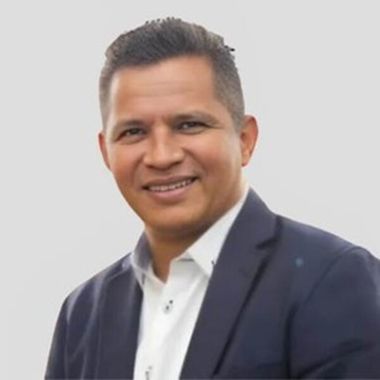
Lacides Hernandez
Executive Director, Prison Fellowship Colombia
Lacides Hernandez is President of Prison Fellowship Colombia and a member of the Board of Prison Fellowship International for Latin America. He holds a Master’s degree in Development from Universidad Pontificia Bolivariana and is a trained theologian from the Biblical Seminary of Colombia.
He leads the Confraternidad Carcelaria de Colombia, mobilising more than 1,000 volunteers from diverse Christian denominations who serve in prisons across the country. Under his leadership, the organisation has expanded its engagement with correctional institutions, families, and communities affected by incarceration.
Lacides is a recognised promoter of restorative justice in Colombia, with extensive experience in developing and implementing programmes within custodial and community settings. His work includes the establishment of faith-based initiatives and the planting of churches both inside and outside prisons, contributing to broader efforts around transformation, reconciliation, and community reintegration.
×
Diego Arias PhD
Director of Training School, National Penitenciary Institute, Colombia
Dr. Diego Arias is Director of the National Penitentiary School of INPEC, Colombia’s national correctional authority. He is a lawyer and philosopher from Universidad Libre and holds a PhD in Law from the Autonomous University of Barcelona, with research focusing on corporate crime, economic criminality, and both legal and criminological approaches to prevention and sanction models.
He also holds a Master’s degree in Legal Theory and Philosophy of Law from Universidad Libre, and a Master’s degree in International Human Rights Law from Université Catholique de Lyon (France).
Dr. Arias brings more than 22 years of experience in the leadership and administration of public institutions and correctional systems. He has also contributed to academia as a lecturer and researcher, with ongoing engagement in the development of correctional policy, training, and institutional capacity.