Speakers

Parallel Workshops
This paper examines the importance of inter-agency collaboration in improving justice-sector outcomes, with a particular focus on addressing systemic challenges in correctional systems. Using the case of South Sudan’s Prisons Development Committees, established under the National Prisons Service of South Sudan Act (2011) and reinforced by the Amendment Act (2022), the study explores how formal coordination mechanisms enhance efficiency, information sharing, and service delivery across the prison system. The analysis is grounded in research that emphasizes the need to embed inter-agency collaboration within evidence-based practices and government legal and policy frameworks.
Chaired by the National Prisons Service of South Sudan, the Committee serves as a multi-stakeholder coordination platform, bringing together key justice sector institutions, related government agencies, and humanitarian partners. Through this forum, stakeholders collectively address critical challenges such as prison overcrowding, food insecurity, and limited rehabilitation services—factors that contribute to poor detention conditions and heightened risks of reoffending. Effective collaboration depends on shared understanding of each actor’s role in both contributing to and resolving these challenges, supported by shared information systems that facilitate coordination and accountability.
Drawing on qualitative analysis, the paper demonstrates how structured collaboration strengthens institutional ownership, improves intelligence and information sharing, and enables context-sensitive, locally driven solutions. The Committee’s inclusive and coordinated approach reduces duplication, aligns cross-sector interventions, and contributes to more effective corrections and law enforcement outcomes. Overall, the findings highlight the value of institutionalized coordination mechanisms in fragile and post-conflict settings, offering a scalable model for strengthening resilient, responsive, and rights-based justice systems.
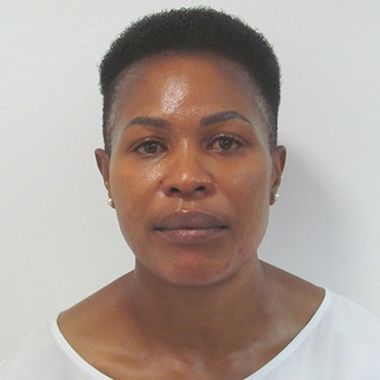
Dr. Phaello Olivia Malataliana is a senior corrections professional with extensive experience in national correctional services and international prison reform. She holds a PhD in Criminology from the University of Pretoria, South Africa, where her research focused on sex offender rehabilitation.
She served in the Lesotho Correctional Service from 2002 to 2022, rising through the ranks to Deputy Commissioner. In this role, she oversaw operations as well as the Health, Legal, and Human Rights Sections, demonstrating a strong commitment to rehabilitation, institutional management, and rights-based service delivery.
Following her national service, Dr. Malataliana transitioned to the international arena, working as a corrections advisor in Somalia and Liberia. She currently serves with the United Nations Mission in South Sudan as a Professional Corrections Officer and Deputy Head of the Corrections Unit, where she supports institutional development and promotes effective, humane, and rights-based correctional practices in post-conflict settings.
Her career reflects a rare combination of practical leadership experience and academic expertise, contributing meaningfully to the advancement of correctional systems in complex environments.