Speakers

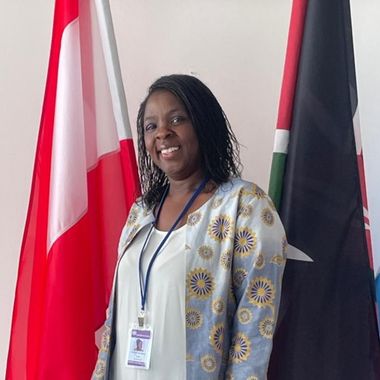
Jane Kuria
Parallel Workshops
Modern correctional systems are under growing pressure to manage complex offender populations amid heightened public scrutiny and constrained resources. In Kenya, where sexual offences account for an estimated 31% of the prison population, the scale of the challenge demands urgent, evidence-informed responses. While the Sex Offender Treatment Programme (SOTP)—an eight-month cognitive behavioural therapy–based intervention—has demonstrated promising gains in accountability, emotional regulation, and behavioural control, a critical gap persists: the transition from custody to community.
This paper argues that without structured, post-release reintegration pathways, the progress achieved during incarceration is unlikely to be sustained. Drawing on practice-based insights from the Kenya Prisons Service–Ustawi Network partnership and ongoing doctoral research, the study introduces the Improved Community Reintegration Model (ICRM). The model reconceptualizes reintegration as a continuum encompassing institutional preparation, supported transition, and long-term community integration.
Anchored in restorative justice, desistance theory, and the African philosophy of Ubuntu, the ICRM emphasizes continuity of care, relational accountability, and shared responsibility between institutions, communities, and individuals. It advances a partnership-driven approach that bridges correctional systems with community structures, addressing stigma, strengthening social support, and enabling sustainable behaviour change.
By integrating theory, practice, and context, this paper offers a scalable and adaptable framework for managing high-risk offender populations in resource-constrained environments. It contributes to ongoing global conversations on modern corrections by demonstrating how collaborative, community-centered reintegration strategies can enhance public safety, reduce recidivism, and restore trust in justice systems.
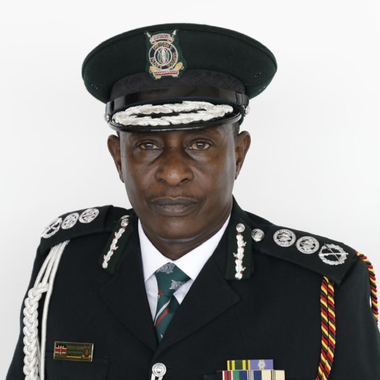
Patrick Mwiti Aranduh is the Commissioner General of Prisons in Kenya, a career correctional professional with over three decades of service in the Kenya Prisons Service. His experience spans correctional administration, institutional management, strategic planning, policy development and operational leadership.
Prior to his appointment as Commissioner General, he served in several senior positions, including Director of Planning and Development, Director of Logistics, Regional Prisons Commander, and Officer-in-Charge of major correctional institutions including Nyeri Maximum Prison and Kisii Main Prison bringing both headquarters-level policy experience and direct institutional command.
As Commissioner General, he provides strategic leadership to the Kenya Prisons Service at a time of continued transformation of Kenya’s correctional system, with increasing emphasis on humane custody, rehabilitation, institutional modernisation, offender preparation for reintegration, and stronger collaboration across the criminal justice system. He is a collaborative leader who values dialogue and teamwork, and has demonstrated an ability to bring diverse stakeholders together around a shared vision for correctional transformation.
He holds a Master’s degree in Leadership and Governance and a Bachelor’s degree in Security Management and Policing Studies from Kenyatta University.
This collaborative orientation is directly reflected in the work presented here. The Sex Offender Treatment Programme is co-implemented by the Kenya Prisons Service and Ustawi Network in correctional institutions across Kenya. Mr. Aranduh brings the national institutional perspective on how such partnerships are authorised, resourced and sustained at scale within a correctional service, complementing the programme and practitioner evidence from the field.