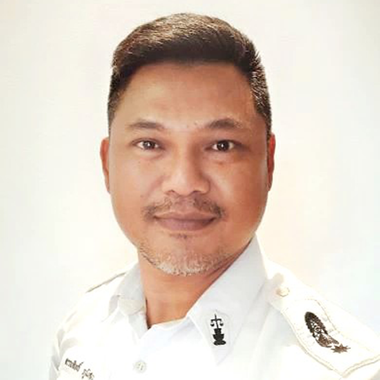
Jarassa Karnkaset
Vocational Training Technical Officer, Senior Professional Level, Central Women's Correctional Institution, Department of Corrections, Thailand
I currently serve as the Director of Inmate Welfare Division at the Central Women Correctional Institution in Bangkok, Thailand. I have dedicated 24 years to the Department of Corrections, reflecting my unwavering commitment to public service and correctional management. My academic journey includes earning a Ph.D. in Management from North Bangkok University in 2023, a Master's degree in Political Science from Ramkhamhaeng University, and a Bachelor's degree in Social Work from Thammasat University.
Throughout my career at the Central Women Correctional Institution, I have held several leadership positions that have shaped my understanding of correctional systems. My roles have included Director of Government Relations and Coordination, Director of Prisoner Classification and Social Work Division, and Head of Policy and Planning Division. My research work has focused on critical areas such as prison management quality assessment and the economic impact of imprisonment. I have also published academic articles examining prisoner rehabilitation programs in Indonesia and knowledge management in the digital age. These experiences have strengthened my commitment to improving correctional systems , prisoner welfare and re-integration programs.