Speakers

Sean Hosman

Rebecca Brown

Kristi Holt
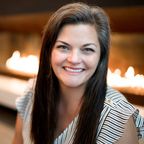
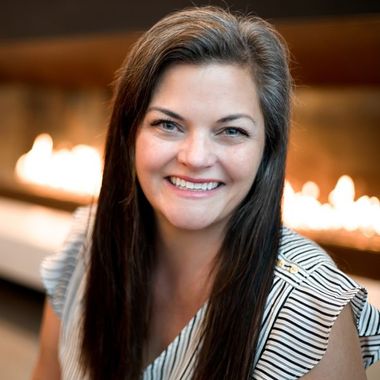
Marjorie Rist

Parallel Workshops
In 2025, the Utah Department of Corrections made a deliberate decision to build its technology infrastructure on its own terms: modular, open, and free from the platform dependencies that have left corrections practitioners with fragmented data and limited options for decades. Tools configured to actual work. A centralized, state-owned data repository accessible to authorized agencies across corrections and human services. The people moving through the system, better understood at every point.
The assessment anchoring UDC's model is the STRONG-R, a peer-reviewed, locally validated, bias-mitigated risk and needs instrument.1 Other agencies recognized what the broader model made possible. When assessment and case data is shared across agency lines, a pre-trial officer has what they need to make a sound release decision. A community partner knows what treatment resources a person has already accessed. A law enforcement officer has context that changes what happens next. Pre-trial programs, sheriff's offices, the Utah Department of Health and Human Services, and community housing organizations each identified specific pieces of the infrastructure that could improve their work and joined the effort. The cross-agency coordination this has required reflects the Sequential Intercept Model2 in practice: a framework the field has long described and rarely had the infrastructure to execute.
There is no published research on this approach because it has not been done before. This session documents it while it is in motion.
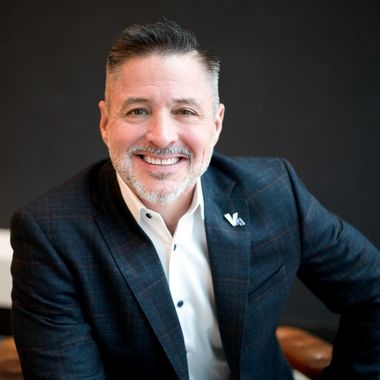
As a justice-impacted serial entrepreneur with 28 years of experience in the correctional industry, Sean Hosman has a unique perspective on both business and second chances. Using technology to drive criminal justice outcomes is one of his many passions, along with finding solutions to improve all of the lives impacted by the criminal justice system.
Sean is a leader in the changing technology landscape, finding ways to improve accuracy and impact results. His career-long understanding of automated decision support, deep expertise in artificial intelligence, and commitment to mission-driven outcomes strengthen and support his work. In 1998, he founded Vant4ge, a human services and predictive analytics technology company that has revolutionized correctional care and case management. He also founded Persevere, a national non-profit that teaches justice-involved individuals to code behind prison bars and provides wrap-around support services and comprehensive life transformation for their families. Finally, Sean founded Banyan Labs, a technology development and AI product company that hires Persevere graduates. Each of these businesses play a vital role in increasing public safety and improving the criminal justice system, while also inspiring hope, teaching skills, and providing opportunities.
Today, Sean has pioneered the use of generative and agentic artificial intelligence in corrections through the creation of AIDA, an agentic AI assessor. AIDA is built to relieve staff by multiplying productivity through the rapid collection of decision-ready data. The results are changing the lives of justice-involved individuals, breaking cycles of multi-generational incarceration, and bringing relief and increased safety to complex criminal justice operations.
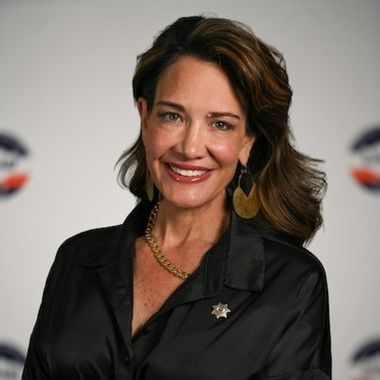
Rebecca Brown, LCSW, was appointed a Deputy Commissioner for the Utah Department of Corrections in August 2023.
She brings extensive experience in correctional healthcare, treatment program development, reentry strategies and operations, having previously served as Assistant Deputy Director at the Utah Department of Health and Human Services (DHHS). In this role, she oversaw clinical services and the transition of correctional health services to DHHS, ensuring continuity of care for justice-involved individuals.
With more than 25 years in community-based and non-profit settings, Brown has played a pivotal role in recidivism reduction, reentry planning, and public safety initiatives. Her work at the Salt Lake County Jail and in community treatment programs laid the foundation for innovative, evidence-based approaches to rehabilitation and successful reintegration.
Brown holds a Master’s Degree in Social Work from the University of Utah, specializing in Forensic Social Work, and is a Licensed Clinical Social Worker (LCSW) and Substance Use Disorders Counselor. She also has an undergraduate degree in Human Services and Business Management.
As an executive leader in corrections and health and human services, Rebecca is committed to improving health and life outcomes for justice-involved individuals while maintaining a balanced focus on stakeholder experience, rehabilitation, and public safety. She remains dedicated to systemic reform, interagency collaboration, and evidence-based practices that enhance both individual and public well-being.

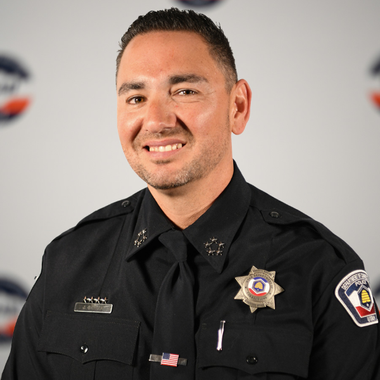
Jared Garcia was appointed Commissioner of the Utah Department of Corrections in March 2025.
He began his career in public safety service in in 2002 when he was hired by the Utah Department of Public Safety.
He served in a variety of roles at the Utah Highway Patrol and State Bureau of Investigation. Garcia oversaw the UHP Central Bureau, which includes Troopers in Salt Lake County and the DUI Squad. He also oversaw the SERT tactical team, the Motor Squad, the Dive Team, and the Public Order Unit.
Previously, Garcia was a captain in charge of the State Bureau of Investigation, which investigates all types of criminal activity, from terrorism and homicide to sexual assault, gang activity, narcotics, and property crime. He also has overseen the Department of Public Safety’s Victim Services program, the Youth Narcotics Task Force, and the Narcotics and Violent Crime Evidence Response Team, among other responsibilities.
In 2017, Garcia was named an International Association of Chiefs of Police “40 Under 40,” an award that recognizes 40 law enforcement professionals under the age of 40 from around the world who demonstrate leadership and exemplify commitment to their Profession.
Garcia served as the Chief of Police in Moab, Utah starting in May 2022. He has also served on the governing boards for the Salt Lake Area Gang Project, Utah Trafficking in Persons Task Force, and the Utah Crime Victim Council. He joined the UDC in October 2023 as Deputy Executive Director.
Garcia obtained a bachelor’s degree from Columbia College in Criminal Justice Administration and a master’s degree from University of San Diego with an emphasis in law enforcement and public safety leadership.