Dr. Reuben Jonathan Miller
Associate Professor, University of Chicago Crown Family School
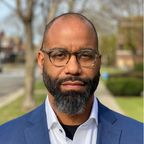
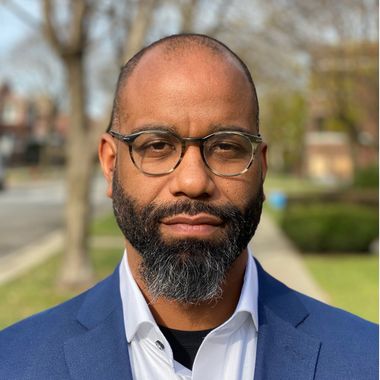
MacArthur “Genius Grant” Fellow and University of Chicago sociologist Dr. Reuben Miller is the author of
Halfway Home: Race, Punishment, and the Afterlife of Mass Incarceration, a “persuasive and essential” (Dr. Matthew Desmond) book that offers a “stunning, and deeply painful reckoning with our nation’s carceral system” (Heather Ann Thompson). As a chaplain at the Cook County Jail in Chicago and a sociologist studying mass incarceration, Miller spent years alongside prisoners, ex-prisoners, their friends, and their families to understand the lifelong burden that even a single arrest can entail. What his work revealed is a simple, if overlooked truth: life after incarceration is its own form of prison. Drawing on fifteen years of research and his own experience as the son and brother of incarcerated men, Miller captures the stories of the men, women, and communities fighting against a system that is designed for them to fail. Named one of its top books in 2021, NPR calls
Halfway Home an “indictment of the criminal justice system [that] should trouble the soul of the nation.” It was longlisted for the 2022 PEN America Literary Award and Los Angeles Book Prize; and won two Prose Awards (for Cultural Anthropology and Sociology, and Excellence in Social Science) and the Herbert Jacob Book Prize. In 2022, Miller was named a MacArthur “Genius Grant” fellow in 2022. A Chicago native, Miller is a sociologist, criminologist and a social worker who teaches at the University of Chicago in the Crown Family School of Social Work, Policy and Practice where he studies and writes about race, democracy, and the social life of the city, and is a research professor at the American Bar Foundation. He has been a member at the Institute for Advanced Study in Princeton New Jersey, a fellow at New America and the Rockefeller Foundation, and a visiting scholar at the University of Texas at Austin and Dartmouth College.