In this talk, I reflect on core findings from two major research projects: the Correctional Worker Mental Health and Well-being Study (MHWS) and the Canadian Correctional Workers’ Well-being, Organizations, Roles, and Knowledge Study (CCWORK). The MHWS includes a survey of anyone working in any role in each provincial and territorial correctional service in Canada. The study uses a replication design for each service, where each of the 13 surveys share core questions yet are also individualized based on the needs of the service. The surveys were administered prior to the onset of COVID-19 in Ontario, New Brunswick, Nova Scotia, Newfoundland and Labrador, Manitoba, Saskatchewan, and Yukon. The services in Alberta, British Columbia, Quebec, Northwest Territories, Nunavut were surveyed during the COVID-19 pandemic. In the CCWORK study, we study correctional officers longitudinally from recruitment to (currently) the eight year of their employment, tracking their experiences with changing health as informed by the work, policies, and their environment. The CCWORK study uses three methods for data collection: 1) in-depth semi-structured annual interviews; 2) annual clinical interviewing using the MINI; 3) an online self-report annual survey. From these two datasets, I talk about correctional worker mental health (including prevalence of mental health disorders), well-being, and organizational considerations that are shared to some degree across all correctional services in Canada. I further expand using work I am doing in the United States and Uganda to speak to global challenges as I explore the state of safety, security, and wellness in correctional services with recognition of how all that constitutes trauma informs both culture and climate. I address how linchpin factors (e.g., outcomes from short staffing, training, retention and recruitment challenges, resources, investigations, gossip) found across federal, provincial, and/or territorial correctional organizations shape health and cultural outcomes for people working in correctional services. I close by proposing areas of focus for correctional organizations (e.g., supportive environments, less gossip, more teamwork/teamliness) to cultivate a positive correctional culture and climate and potentially reduce compromised health and other related issues.
Moderated by Bernie Warner, Secretary of Corrections, Washington (retired), United States
×
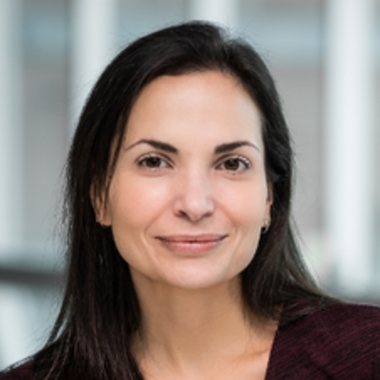
Rosemary Ricciardelli
Professor and Research Chair, Memorial University of Newfoundland, Canada
Dr. Rosemary Ricciardelli is Professor (PhD) in the School of Maritime Studies and Research Chair in Safety, Security, and Wellness, at Memorial University’s Fisheries and Marine Institute. The winner of the 2023 International Corrections and Prison Association’s Research Excellence Award, the Canadian Sociological Association’s Angus Reid Applied Researcher Award, and the President’s Award for the International Community Justice Association in 2024. Ricciardelli was also elected to the Royal Society of Canada and is a fellow of the Canadian Academy of Health Sciences. Her research centers on evolving understandings of gender, vulnerabilities, risk, and experiences and issues within different facets of the criminal justice system and among mariners. She has published 18 books, 320+ journal articles and 75+ chapters all in the areas of police, firefighting, correctional workers, public safety communicators, and criminalized persons, and wellness – broadly defined. As a sex and gender researcher, her interests lay in the social health, identity construction, and lived experiences of individuals. She leads a longitudinal study on the mental health and well-being experiences of correctional officers employed by Correctional Services Canada and has participated in correctional officer training with Correctional Services Canada. She also works in partnership on a research project with the Uganda Prison Service and contributes to MicroResearch International.