Designing Hope: How Prison Design Experts Are Reimagining Correctional Spaces
_________________________________________________________
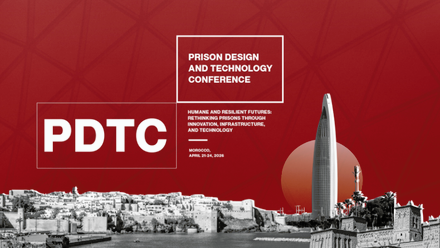
1. PDTC 2026 focuses on "Humane and Resilient Futures" – what does this theme mean to you as an architect?
The theme is both challenging and inspirational, which is often how architects see the world. At GB-A, we are committed to making correctional facilities as humane, person-centered, trauma-informed, and full of hope as we can, while acknowledging that this is an approach unique to each part of the world in which we work. Resilience also has many lenses – with climate change coming to the forefront of conversation and requiring an architectural response which incorporates design redundancy for more extreme weather events, infrastructure redundancy - particularly in electricity supply, water supply and waste - and site accessibility.
However, ‘resilient futures’ can also speak to human resilience and how as designers we can create environments that create hope and aspiration. Along these lines, it is about coming together to discuss what practices, programs, design interventions and environments are more effective to build social resilience, personal growth and development for a better future.
2. Why is it important to bring together architects, correctional leaders, technologists, academics, and human rights advocates under one roof?
Bringing together interprofessional collaboration and partnerships with a broader community is crucial to reinforcing the mission of justice planners and architects of improving people’s experiences and lives through thoughtful design. To achieve this mission, it is essential that both architects and justice reform activists/human rights advocates trust that those who design correctional facilities are committed to positive, systemic change.
There is also a critical need for additional information and knowledge about how prison quality affects long-term wellbeing, behavioral and reintegration outcomes for people living and working inside correctional facilities. Over the past decade, research on the broader connection between physical environment and well-being has grown in other relevant institutional settings (i.e. hospitals, forensic and treatment facilities), while studies of correctional facilities as buildings and environments where the lives of people can be significantly improved remain scarce.
We need to partner with researchers and data analysts to embed current academic knowledge in policy discussions and ensure that existing evidence relating to the architecture and physical environment informs future design and renovation projects.
3. How does the African context and the dedicated sub-theme on African solutions enrich the global conversation?
From a recent conference on prison infrastructure I attended in Namibia, it was clear to me that a quiet prison construction boom is taking place across the African continent. And although the reasons behind construction vary wildly between countries and it is difficult to generalize, I also noticed that a number of African countries are considering building large, “mega” prisons.
Having this dedicated sub-theme is critical to sharing experiences with one another and making valuable contributions to the dialogue on modernizing correctional infrastructure in the African region with an emphasis on improving technical standards for more humane and rehabilitative prison environment. Discussions about the pros and cons of basic issues and specific themes such as the optimal location and size of a correctional facility, its basic functional components, minimum separation requirements by age, gender, security level, risk and needs; the capacity and type of housing units; the type and size of accommodations (single vs. multi-occupancy cells); office, programs and support space requirements, and supervision and management approaches, are all critical to produce a well-planned and well-designed correctional facility.
By focusing targeted attention on specific regional needs, challenges and solutions, this approach can better inform policymakers, decision-makers, and the design consultants who advise them in the region, leading to more appropriate policies, improvements and more humane, effective, and more contextually appropriate correctional infrastructure.
By exchanging knowledge, correctional agencies, architects, engineers, and other stakeholders are better equipped when they return to their countries to bring good practices and considerations for local contexts and to formulate the questions that should be asked during the planning and design phases of any prison project, moving beyond “one-size-fits-all” Western models.
4 & 5. Why is it critical to discuss prison design and technology at a global level right now and how do international conferences facilitate knowledge exchange that might not happen through other channels?
All around the world, the way in which correctional facilities have been commissioned and built in the past has proved to be a barrier to rehabilitation and the welfare of their users and occupants. Every project presents an opportunity to either institutionalize the past or to envision a new future that is supported by innovative planning, design, and construction concepts.
In a growing number of countries, replacement of outdated facilities and capacity expansion is needed. Therefore, if new correctional facilities are to be upgraded or built from scratch, it is crucial to come together in exchanging knowledge about what specific areas of architecture and design support better the health and wellbeing of their core occupants: people residing in, working in, and those visiting correctional facilities.
For many countries, jurisdictions, and governments, this might be a once in a lifetime investment opportunity. A substantial, long-term public investment is required for new prisons. Therefore, decisionmakers should strive to build facilities that are designed to be effective, humane, and rehabilitation-focused, rather than just cost-cutting or purely punitive and harmful. It almost costs the same to build a bad than a well-deigned correctional facility. The additional cost of incorporating evidence-based design principles that improve living conditions and staff environment - which can lead to better outcomes, lower operating costs (e.g., energy efficiency) and reduced reoffending, is often a relatively small fraction of the overall construction budget.
Essentially, since the taxpayer is already committing a huge sum of money, it is more fiscally and socially responsible to build a facility that achieves better outcomes for all.
The sharing of information amongst jurisdictions facing similar challenges and experiences all over the world is of enormous value in terms of exchanging knowledge, lessons learnt, and best practices as they relate to physical and environmental factors. Quite often, our work tends to be inward-focused, which results in us applying the same solutions and repeating the same layouts and designs within one’s own region.
Attending international conferences and global events exposes you to innovative approaches, new technology and creative design solutions used in other correctional systems facing similar challenges. It is very inspirational and eye-opening and, professionally, crucial to gaining knowledge of international standards and best practices and expanding one’s own expertise. But above all, it is also very humbling to see how other countries with less means and resources are accomplishing even more in terms of rehabilitation and humane treatment with their modest physical improvements and shifts in culture, philosophy and practices.
6. How can thoughtful architectural design contribute to rehabilitation and reintegration outcomes?
The design and elements of a prison environment can aid rehabilitation efforts and improve reintegration outcomes by enabling transformation, personal growth and development. To produce the conditions and environment that can assist people to move towards this positive and prosocial change, the physical spaces must create opportunities for people to heal and recover, develop a sense of personal autonomy and competence, and develop positive relationships with others.
The promotion of spatial autonomy is one of the most important qualities that a correctional facility must offer. Dependency can undermine their sense of dignity and deepen their feelings of helplessness and resentment. For instance, allowing and giving ability to people to adjust physical components and spaces to make them more personalized and aesthetically interesting helps to exert autonomy. Other autonomy-enhancing practices provide means of personal control in the physical environment (e.g. freedom to choose where to sit and how to engage with the space, rearrange furniture, decorate their personal space with personal photos, posters, curtains, etc.)
Another critical aspect of contributing to rehabilitation and better reintegration is providing the right number and types of spaces that support skill and knowledge development and the opportunity of engaging in rehabilitative programs and activities such as educational and vocational classrooms, individual and group program rooms, recreational rooms, training workshops and working spaces. With the design of these spaces supporting the learning and teaching experience while enhancing cognitive performance, task enthusiasm and focus by providing visual diversity and flexible layout, being well-lit and well-ventilated, and equipped with movable furniture and modern technological aids.
The penal ideology of normalization also offers opportunities to inform prison design in ways that are supportive of behavioral change and transformation. This normalization of the physical space and interior conditions can be accomplished by using materials, furniture and other interior elements that can help create a warm environment (e.g. wood doors, wood ceiling beams, soft finishes, inviting furnishings, carpet, accent walls, decorative artwork, interior plants, etc.)
And finally, there are some overarching aspects of the design that are physical and emotional health-promoting and supportive of healing, recovery and wellbeing, all critical aspects for a successful transition back into the community. Color, lighting, windows, views, access to fresh air and connection with natural elements are associated with various health benefits: reduced fatigue, blood pressure, anxiety, depression and feelings of pain; increased relaxation and soothing; reduced stress, irritability and aggression; increased reaction time; improved sleep cycles, mood and overall satisfaction.
7. From your perspective, what are the most pressing challenges facing correctional facilities today in terms of design and infrastructure?
From both a local and international perspective, we are seeing critical issues impacting facility planning today include:
- Changes to the population served: complex histories of trauma, seriousness of offenses, mental health, medical and disability issues, aging population and accessibility issues.
- Expansion of programs and services, especially mental health, substance abuse & medical.
- Increased demand for annual operating costs.
- Shortage of staff affecting operations, housing management (dynamic supervision) and efficient movement throughout the facility and effective service delivery model.
- Uncertainty of planning for future capacity needs (beds and program space).
-
How to balance the need for security and durability with the use of aesthetics, normalized, soft materials, fixtures and finishes.
-
How to balance the need for universal design and architecture solutions with the need for adaptation or specialization based on the changing needs and characteristics of the population.
8. The conference emphasizes context-sensitive design. Why is this approach essential in correctional architecture?
Continuing to use Africa as an example to illustrate the importance of context-sensitive design. In some African countries, governments still operate prison buildings built under the colonial era, with architecture styles representing an oppressive institution of social and political control of the population. These outmoded layouts limit the functionality of the building and compromise treatment and rehabilitative goals.
On the other hand, the emergence of prison infrastructure in Africa during the nineteenth-twentieth centuries followed a “copy-and-paste” approach, with architecture styles imported from overseas, Europe and North America mainly.
This approach disregards the economic context, budget constraints, human resources and specific needs of each country and results in the building of prisons which are not appropriate to local conditions and the societal and cultural values of the broader community.
When we listen, we learn. As professionals in the field, our role is not one of dictating a solution, but rather one of listening and asking lots of “why” “how” and “what if” questions in working in collaboration with our clients to arrive to value-added solutions responsive to the unique needs and realities of each client. Every project must be approached with a fresh look. No past answers, no cookie-cutter solutions. The solutions for each agency must be unique. Therefore, dedicating a sub-theme to discuss the unique African context and socio-economic, cultural, and environmental local realities allows professionals involved in the design and upgrade of correctional facilities to provide tailored solutions that are relevant and sustainable.
The same applies to the correctional technologies field. To make the best use of prison technology and ensure its effective operation, technology solutions must consider specific national regulatory frameworks, the economic realities and limitations of maintaining technology over time, as well as local geography, climate change and conditions at particular institutions, adjusting applications and products accordingly.
9. What does "climate-adaptive" design mean in practice for correctional facilities, particularly in regions facing extreme weather?
Climate-adaptive design in correctional facilities is fundamentally about creating environments that are resilient, safe, and supportive of wellbeing, even under the pressures of extreme weather. A robust building envelope with highly durable, weather-tight materials and construction methods to withstand the challenges posed by heatwaves, cold snaps, high winds, and heavy rainfall. This ensures both the long-term resilience of the facility and the safety of people in custody and staff.
Passive environmental design strategies further enhance resilience by optimizing building orientation, maximizing daylight through increased window areas, and facilitating natural ventilation. These measures reduce reliance on mechanical heating and cooling, contributing to energy efficiency and occupant comfort. Enhanced insulation, using sustainable, high-R-value materials throughout the building envelope, helps maintain stable indoor temperatures and minimizes energy consumption during extreme weather events.
Redundant infrastructure is another critical aspect, with essential systems such as electricity, water, and waste designed to include backups and alternative supply routes. This redundancy ensures continued operation during climate emergencies or infrastructure failures. Secure outdoor spaces, including landscaped courtyards and recreational areas with shade-providing vegetation, allow for safe outdoor access while mitigating heat and supporting wellbeing.
Finally, water management and harvesting systems, such as rainwater collection and conservation measures, ensure a reliable supply and reduce environmental impact, especially in drought-prone regions and can reduce the impact of downstream flooding.
Together, these strategies create correctional environments that are not only climate-resilient but also humane, adaptable, and conducive to rehabilitation and recovery.
10. How can architects balance security requirements with creating spaces that support rehabilitation and staff wellbeing?
This is a topic that secure facility architects deal with daily. In our experience, however, our response brings a nuance that asks the question in reverse – designs and operating models that support and enhance rehabilitation, prioritize staff wellbeing and encourage positive interaction between staff and incarcerated people are safer and more secure environments.
Every secure facility has key security and robustness requirements – whether that be perimeter physical and electronic security, individual building security and robustness, and planning and design solutions that provide emergency egress points for staff in the event of an incident. However, these security overlays should be integrated within a therapeutic and trauma-informed design response, including the spatial autonomy we discussed earlier.
This is a topic that secure facility architects address daily. However, our experience suggests that the question is best approached from a different angle: rather than seeing security and rehabilitation as competing priorities, we find that environments designed to support rehabilitation, prioritise staff wellbeing, and foster positive interactions between staff and incarcerated people are, in fact, safer and more secure overall.
Every correctional facility must meet rigorous security and robustness standards. This includes perimeter security—both physical and electronic—robustness of individual buildings, and planning for emergency egress points to ensure staff safety during incidents. These elements are non-negotiable and form the backbone of any secure facility. However, true innovation lies in how and where these security overlays are integrated into the broader design philosophy. Creative design solutions solve security requirements within therapeutic and trauma-informed design responses. For example, spatial autonomy—allowing individuals some control over their environment—can be incorporated without compromising safety.
Promoting safety, both physical and emotional, lies at the foundation of any trauma-informed approach. Physical wellness requires a clean and orderly environment. Emotional wellness requires a healthy and aesthetically pleasant indoor environment. By designing spaces that are calming, dignified, supportive of personal growth, and connected to nature, architects can help reduce tension and the likelihood of incidents, thereby enhancing safety and security. Prioritizing staff wellbeing through thoughtful layouts, natural materials, and access to restorative spaces also leads to a more positive workplace culture, which in turn supports safer operations.
11. Why should sustainability be a priority in correctional infrastructure development?
Sustainability is essential in correctional infrastructure development for a multitude of reasons that extend far beyond environmental stewardship.
Correctional facilities are among the most resource-intensive public buildings, operating continuously—24 hours a day, 365 days a year. While the initial construction costs are significant, they are often eclipsed by the ongoing operational expenses associated with energy, water, staffing, and consumables. Even modest improvements in energy efficiency, water conservation, and waste reduction can yield substantial long-term savings, making sustainable design a sound fiscal strategy.
The constant use of these facilities means that the return-on-investment for sustainability measures, such as high-performance insulation, energy-efficient lighting, renewable energy systems, and water-saving technologies is realized much faster than in typical buildings. In fact, payback periods for these investments can be 25–50% shorter, allowing public funds to be redirected to other critical services.
Beyond cost savings, sustainable correctional centers contribute to healthier environments for both staff and incarcerated people. Features like natural lighting, improved ventilation, and access to green spaces support physical and mental wellbeing, which in turn can enhance rehabilitation outcomes and staff retention.
Sustainability also builds resilience against climate change and resource scarcity. Climate-adaptive design—such as robust building envelopes, passive heating and cooling, and infrastructure redundancy—ensures that facilities remain safe and operational during extreme weather events.
12. What are some examples of sustainable design principles that can be applied to prison construction or renovation?
From a planning perspective, long-term sustainability comes from right-sizing correctional facilities and planning them according to the most appropriate security level(s) to reduce the cost of construction, equipment and systems, and maintenance.
From an architect’s perspective, sustainable design principles are fundamental to the construction and renovation of correctional facilities, offering both immediate and long-term benefits for people and the environment. One of the most effective and universally applicable strategies is the use of natural ventilation. This principle is relevant in both the developing and developed world, as it reduces reliance on mechanical systems, lowers energy consumption, and improves indoor air quality.
Basic passive design principles—such as optimizing building orientation, using high-quality insulation (manufactured or traditional), and managing air movement—are cost-effective yet powerful. These strategies help maintain comfortable indoor conditions, often with little or no additional cost. Incorporating daylighting, shading of windows and openings, and careful management of condensation further enhances energy efficiency and occupant wellbeing.
A growing body of research, including the work of Professor Dominique Moran, highlights the importance of access to green spaces within prison environments. Facilities with more green space inside their perimeters experience lower levels of self-harm and violence, and staff report fewer sickness absences. These benefits are especially pronounced for younger and unsentenced people, and in overcrowded settings. Exposure to outdoor green spaces or even images of nature provides restorative effects, increased calm, and opportunities for reflection, underscoring the value of landscape-led approaches in prison design.
Finally, the most sustainable investment within correctional facilities is investing in incarcerated people and staff – breaking the cycle of recidivism and generational incarceration can reduce the overall human and environmental impact.
13. How can correctional facilities be designed to be adaptable and resilient for future needs?
Key aspects of adaptability and resilience in correctional facility design must center on their impact on people. Facilities that are purposefully designed to enhance the wellbeing of both incarcerated individuals and staff will remain relevant and effective over time. While the composition of the population—such as age, security level, and risk profile may shift, the foundational principles of trauma-informed and biophilic design remain universally applicable.
A recurring challenge in correctional planning is balancing the number of beds in individual buildings with the optimal staffing levels required for safe and effective operations. There is often pressure to construct larger accommodation units to reduce staff-to-incarcerated person ratios and achieve perceived operational efficiencies. However, with the right staffing models and meaningful engagement between staff and representatives of the incarcerated population, smaller, safer units can often be managed at equal or lower cost compared to larger ones. Importantly, smaller accommodation buildings also allow for greater flexibility, ensuring that future lower-security occupants are not disadvantaged by the security needs of higher-risk individuals.
14. What message would you like to share with potential attendees or presenters who are considering participating?
The first ever international combined planning-and-design and security conference, in Istanbul in April 2024 was extremely successful with over 230 delegates and presenters from more than 50 countries around the world. We are both still benefiting from what we learnt at the conference and the networking and connections we have made with people around the globe.
Often, we are faced with similar challenges, and we can learn from each other and continue to find better, more sustainable, and more cost-effective ways to improve the lives of incarcerated people and the staff that work with them – making communities safer, too. This is a unique opportunity for correctional practitioners to come together in exchanging field knowledge and expertise with social innovators and reformers. Through a mix of exhibitors, live demonstrations, conference panels and workshops, as well as tours of local prison facilities (Marayca’s favorite part), conferences like this offer a platform like no other for creative thinking, technology development and innovation.
The next planning and design-focused conference will be held in Morrocco, which will present an exciting opportunity to gain greater understanding of correctional systems within the unique context of Morrocco as well as the boarder African continent.
15. As someone who works at the intersection of architecture and justice, what drives your commitment to this field?
Kavan: I will never forget my first visit to a prison as a 21-year-old architecture student, tasked with measuring up for some minor redevelopment works. I saw so many people whose lives had taken a very different path from mine, and, for reasons unknown, I was fortunate enough to be there only for a day, in a professional capacity, and able to go home at night. As I reflected on this experience over the following months and years, combined with my fundamental belief that our environment profoundly influences us, my resolve to create architecture that offers hope and can change lives grew ever stronger.
This motivation has been enhanced by many examples over the years including one interaction with a previously incarcerated person who said “I had been in three different prisons before my time at Ravenhall Correctional Centre. But, there was something about that place – the opportunities offered to me, the care of the staff, and the training facilities that gave me confidence in my skills – and the place just made me feel like there was a better life for me. Since release, I’ve had the same full time job for over three years, my son has a stable household, and I know I won’t ever be going back.”
Marayca: I have always been a person who believes in the goodness of people and wants to help others. Through my training as a criminologist and my work as a justice planner, I have learned the importance of understanding “what has happened” to people rather than viewing incarcerated individuals through the lens of “what is wrong” with them. As a criminologist, I do strive to change society’s perspectives towards the incarcerated and the use of incarceration. As a planner, this has helped me to understand that for people to change, grow, and better themselves, we must plan safe spaces where people can be treated and to design them in a way that people can heal. The process of healing is highly dependent upon the action and interaction we experience in those spaces.
16. What gives you hope when it comes to the future of correctional design and infrastructure?
The hope comes from the people with lived experience and staff giving us positive (and constructive) feedback about the impact of rehabilitative environments on their mental health, their health, their sense of self-worth, their enjoyment of each day, and their hope for the future, said Kavan.
More than ever, my hope comes from an emerging “conscientious” client base that is heavily invested in social responsibility and the environment. I am also hopeful about the growing cooperation and collaboration of multiple stakeholders in open discussions that cultivate creative concepts and forward-thinking ideas. There is a push around the world to reimagine justice and carceral spaces by fostering partnerships between correctional agencies, research organizations, people with lived experience and community interest groups. By expanding data, research and knowledge, we can use a much larger chain of evidence to keep systems accountable and moving forward to make carceral settings more humane and effective in serving the community, said Marayca.